Confident Kids Bundle: Emotional Strength for Ages 3–5
Confident Kids Bundle: Nurturing Emotional Strength for Ages 3–5
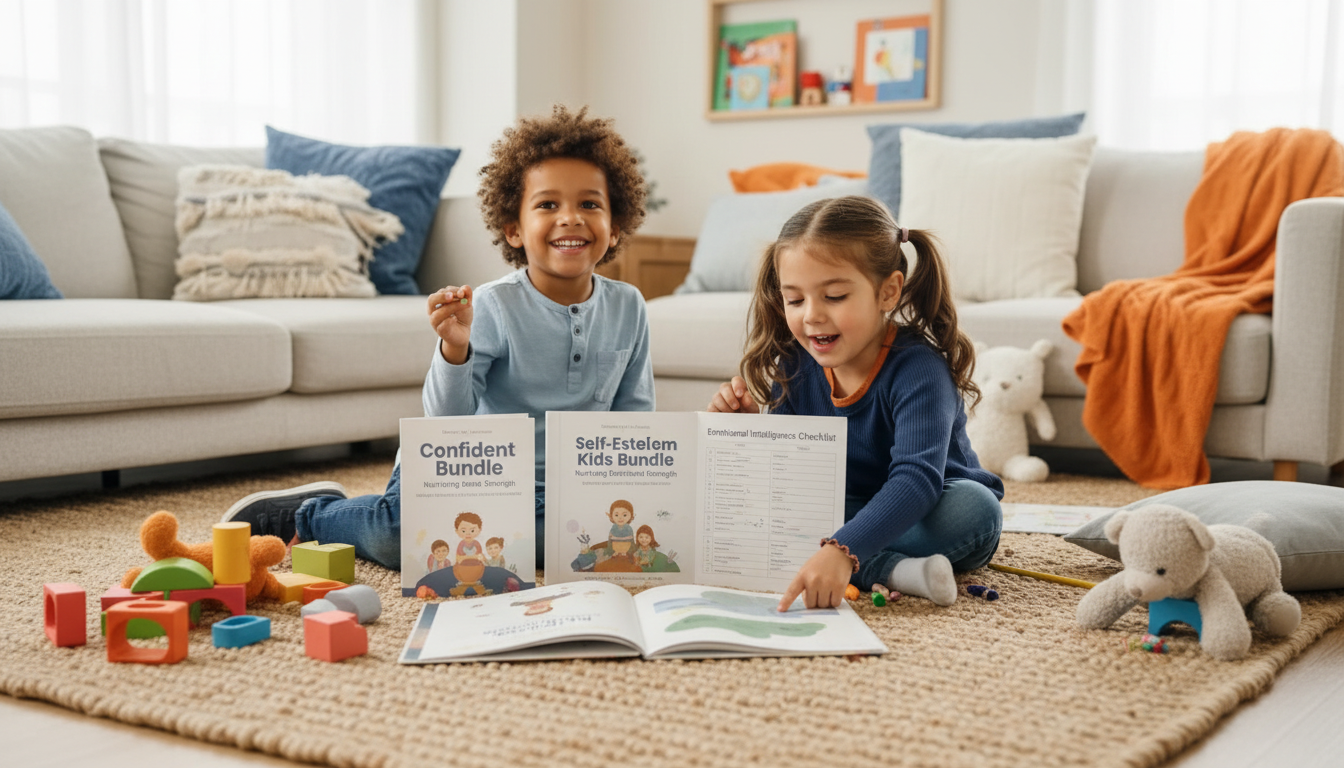
Building confidence in early childhood often comes down to small, repeatable moments: naming feelings, practicing brave choices, and receiving steady encouragement. The Confident Kids Bundle: Nurturing Emotional Strength brings those moments together in a simple 3-in-1 system—one practical parenting guide, a set of self-esteem activities for ages 3–5, and an emotional intelligence checklist to help you notice growth over time.
Designed for real family life (busy mornings, transitions, sibling conflict, and big feelings at bedtime), this bundle focuses on doable tools you can repeat until they become familiar—both for kids and for the adults supporting them.
What’s Included in the 3-in-1 Bundle
This bundle works best when the pieces support each other: learn a tool, practice it in play, then observe and track it using the checklist.
- Parenting guide focused on emotionally supportive routines, language, and responses during big feelings
- Self-esteem activities (ages 3–5) that fit into short play windows (about 5–15 minutes)
- Emotional intelligence checklist to track skills like labeling emotions, calming strategies, and empathy
- A complete system: read, practice, then notice patterns—without turning it into homework
Bundle Pieces and What They Help With
| Bundle piece | Primary focus | How it’s used at home |
|---|---|---|
| Parenting guide | Co-regulation and supportive communication | Use during real moments (tantrums, transitions, sibling conflict) |
| Self-esteem activities (Ages 3–5) | Confidence, autonomy, positive self-talk | Practice during calm time with games, prompts, and mini-challenges |
| Emotional intelligence checklist | Tracking skills and noticing patterns | Review weekly to spot strengths, triggers, and next-step goals |
Why Emotional Strength Matters Most Between 3 and 5
Ages 3–5 are a rapid-growth window for language, impulse control, and social learning. Kids are starting to understand rules and relationships, but they still need adult support to handle frustration, waiting, and disappointment. When feelings get big, behavior is often the only “language” available—until children learn better tools.
- Words reduce escalation: repeated practice with feelings vocabulary helps children express needs without melting down as quickly.
- Confidence comes from trying: “I can try” moments build resilience more reliably than only celebrating perfect outcomes.
- Consistency lowers power struggles: a steady approach helps kids feel safe and helps adults respond with less guesswork.
For more on typical social-emotional growth in early childhood, see the CDC developmental milestones and NAEYC’s overview of social and emotional development.
How to Use the Bundle in a Simple Weekly Rhythm
Instead of trying to “fix everything” at once, pick one skill theme and stick with it for a week. Repetition is where confidence forms—kids start to recognize the routine, the words, and what happens next.
- Choose one theme per week (calming down, brave trying, sharing and taking turns, handling disappointment).
- Read one small section of the parenting guide first so adult responses and phrases stay aligned.
- Do 2–4 short activities during calm moments; repeat favorites to build mastery.
- Use the checklist once a week to notice improvements and choose the next focus.
- Keep expectations realistic: progress often looks like quicker recovery, not zero meltdowns.
Sample 4-Week Routine (Adjust as Needed)
| Week | Theme | Practice idea | What to look for on the checklist |
|---|---|---|---|
| 1 | Naming feelings | Feelings hunt (books, faces, mirrors) | Uses 2–4 feeling words without prompting |
| 2 | Calming tools | Belly breathing + cozy corner routine | Tries a calm-down strategy with help |
| 3 | Brave trying | “Try again” game with low-stakes challenges | Persists for 10–30 seconds longer than before |
| 4 | Empathy and repair | Role-play sorry/repair scripts with toys | Offers comfort or helps fix a mistake |
Self-Esteem Activities That Fit Real Family Life
Confidence grows when children feel capable and connected—especially after mistakes. The activities in the bundle are short on purpose, making them easier to repeat when you actually have time (before dinner, after preschool, or while a sibling naps).
For stress and coping support that complements these routines, the American Academy of Pediatrics offers practical guidance on helping children manage stress.
Using the Emotional Intelligence Checklist Without Pressure
To make weekly check-ins easier, create a simple “routine station” where you keep your materials together. A desk organizer like the 360° Rotating Multi-Compartment Pen Holder – Stylish Desk Organizer or the Cute Ceramic Tulip Pen Holder can keep pens, notes, and your checklist in one spot so the habit is easier to maintain.
Supportive Phrases That Build Confidence and Calm
Product Details and Who It’s Best For
The Confident Kids Bundle: Nurturing Emotional Strength | 3-in-1 Bundle is best for families with children ages 3–5 who want structured, repeatable tools for confidence and emotional skills.
If your child is heading to preschool or daycare, pairing routines at home with predictable routines on-the-go can help. The Insulated Thermal Lunch Bag is a simple way to keep snacks consistent—especially helpful when hunger is a common trigger during transitions.
FAQ
Is this bundle appropriate for a 3-year-old with frequent tantrums?
Yes. It’s designed for ages 3–5 and focuses on co-regulation tools, supportive language, and short practice activities during calm moments. The checklist also helps identify triggers and track improvements like faster recovery and easier reconnection.
How long do the activities take each day?
Most activities fit into 5–15 minutes, and doing them 2–4 times per week is enough to build familiarity through repetition. Daily life moments—like transitions, frustration, and sibling conflict—also become practice opportunities using the parenting guide phrases.
Can multiple caregivers use the same approach?
Yes. The parenting guide provides consistent language, and the checklist helps everyone notice the same patterns and goals. A brief weekly check-in keeps responses aligned across home and childcare.












Leave a comment